Anyone can point a hose. A placement operator reads the pour: keeps the head of concrete moving in front of the screed, feathers the flow into corners and around rebar, and never buries a finisher or leaves one waiting. That is what your crew gets when Caruth runs the pump.
We work as part of your pour crew for the day: your sequence, your pace, our reach and our hose discipline.
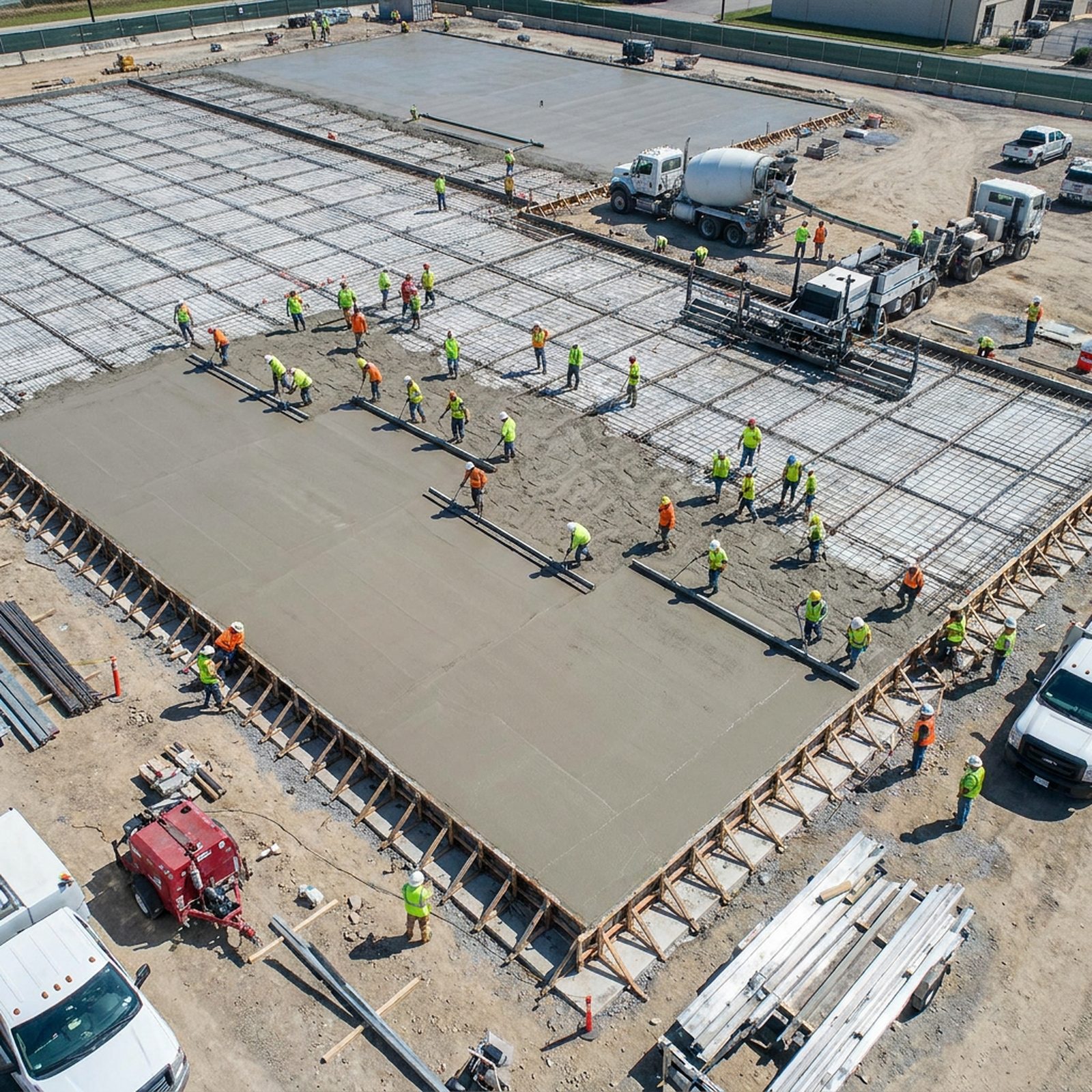
Bad placement makes good crews look slow.
Concrete that lands where it belongs does not get shoveled twice. Your labor goes into finishing, not moving mud.
An even head of concrete in front of the screed is the start of a flat floor. It begins at the hose, not the trowel.
Placement at the crew's pace means the whole slab ages evenly and finishes on one clock.
| The pour | Slab, wall, footing, or a combination day. |
| Your crew | How many finishers and the sequence you want to run. |
| Volume & timing | Yardage and truck spacing so the feed never starves. |
| Site | Access, setup position, and washout location. |
Book the pump and the operator that keep the pour moving.